ZynDeskZynDesk
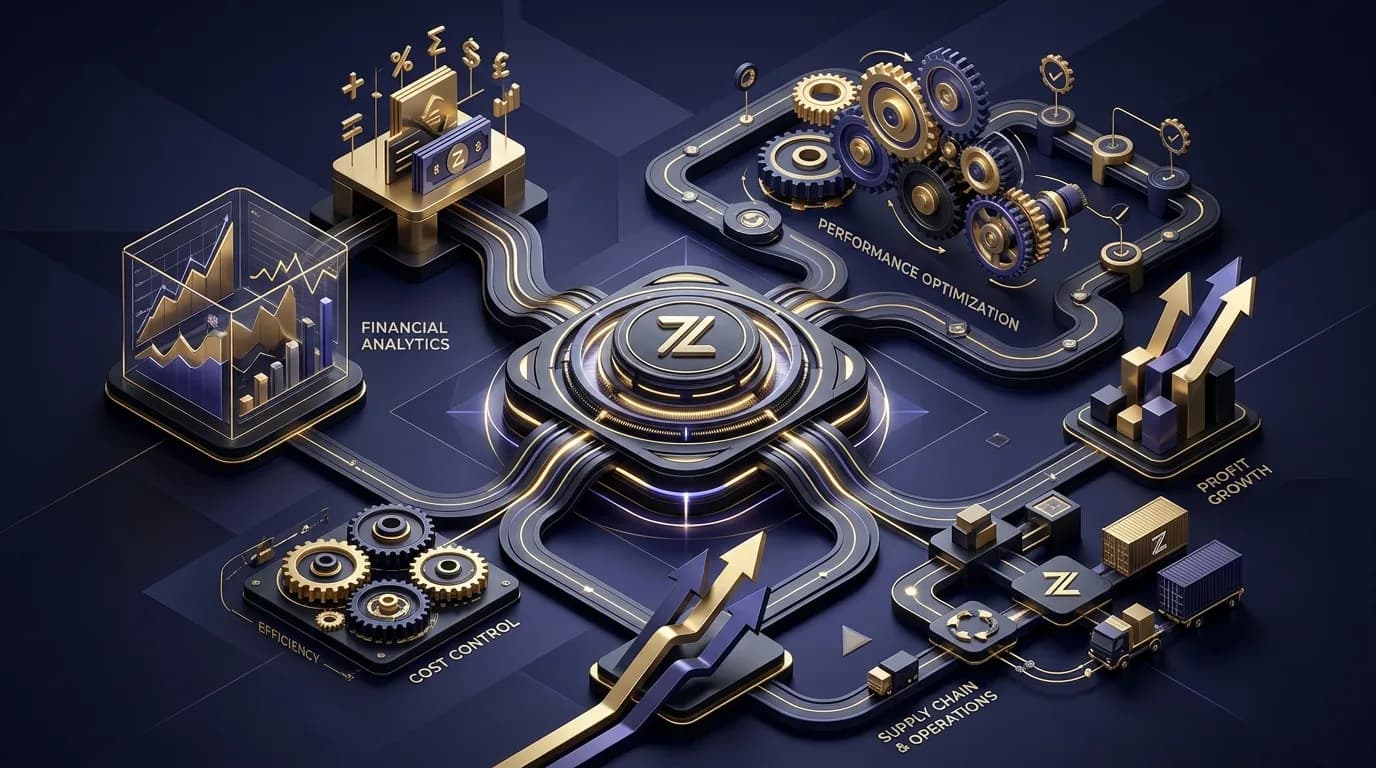
Businesses in today's competitive markets face growing challenges in managing their daily operations, from accounting, sales, and procurement to inventory, human resources, and financial and administrative performance monitoring. As a business expands, adding more customers, employees, and branches, managing these operations through separate software, Excel spreadsheets, and disconnected records can lead to fragmented data, limited visibility, and difficulties in making informed decisions.
This is where an ERP System becomes an essential technology solution. It helps businesses organize their resources and connect different departments within a unified working environment. Instead of treating each department as an independent unit, an ERP Software for Businesses provides an integrated management structure that supports operational tracking, information sharing, and improved business efficiency.
The importance of an Enterprise Resource Planning System goes beyond data organization. It also supports financial control, reduces operational errors, improves resource utilization, and provides management with the information needed to understand the company's actual performance.
As competition increases in the Egyptian and Saudi markets, choosing an Integrated ERP Software has become an important step for businesses seeking to modernize their management processes, achieve measurable growth, and build more organized and sustainable operations.
ERP stands for Enterprise Resource Planning. It refers to a software system designed to connect a company's core business processes, allowing different departments to operate through an interconnected system and shared data environment.
An
Accounting and financial operations.
Sales and customer management.
Procurement and supplier management.
Inventory and product movement.
Human resources and employee management.
Revenue and expense tracking.
Business reporting and performance monitoring.
Administrative and operational data management.
The main value of an ERP system lies in connecting information across departments rather than keeping data isolated within individual teams. This allows management to understand how different business activities affect one another.
For example, when a sales transaction is recorded, its information can be connected to financial records, inventory movements, and related reports, depending on the system's configuration.
This is what makes ERP Software different from using multiple disconnected applications that do not exchange information efficiently.
Many companies rely on different tools to manage their operations: one application for accounting, another for sales, Excel spreadsheets for inventory, and multiple communication channels for following up with employees and customers.
Although this approach may work during the early stages of a business, it becomes increasingly difficult as operations grow.
Some of the most common challenges include:
When each department records its information independently, differences may appear between reports and financial figures, making it difficult to identify the most accurate and up-to-date information.
An Integrated ERP System helps centralize business data and reduces the need to enter the same information in multiple places.
Without connected visibility into revenue, expenses, procurement, and inventory, monitoring operational costs becomes more complicated.
Through a Business Management System, management can organize financial and operational information and monitor performance indicators that support better business evaluation.
When management needs to collect reports from several departments before making a decision, responding to market changes can become slower.
An ERP System for Businesses provides a more organized environment for accessing information and monitoring operational results.
Increasing the number of employees, customers, products, and branches leads to larger volumes of data and daily tasks.
This makes choosing a suitable Cloud ERP System or an ERP solution that matches the company's operational needs increasingly important, while considering security, user permissions, and backup requirements.
Businesses have different operational requirements, so the modules they need may vary. However, several core functions form the foundation of most ERP Software for Businesses solutions.
Financial management is one of the most important parts of any organization because it provides visibility into the company's financial position and helps monitor revenue, expenses, and liabilities.
An ERP Accounting System helps organize financial data and connect it with other business operations, supporting the management of:
Revenue and expenses.
Accounts receivable and accounts payable.
Invoices and financial transactions.
General ledger and accounting entries, depending on system functionality.
Financial reports.
Cash flow monitoring.
Financial integration becomes particularly important when sales, procurement, and inventory operations are part of the same business cycle.
Businesses need to monitor the sales cycle, from registering customer information to completing sales transactions and following up on collections.
A Sales Management Software helps organize customer information and commercial activities, improve order and deal tracking, and provide data for evaluating sales team performance.
Key information that management needs to monitor includes:
Customer information.
Quotations.
Sales orders.
Invoices.
Sales performance tracking.
Commercial performance reports.
When sales operations are connected to accounting and inventory, business transactions become easier to monitor.
Inventory management is a major challenge for trading and manufacturing companies. Inaccurate product records may result in stock shortages, excess inventory, or delays in fulfilling customer orders.
An Inventory Management System helps organize product information and monitor stock movements, providing better visibility into available quantities and warehouse operations.
Key functions of Warehouse Management Software include:
Product and item registration.
Inventory balance tracking.
Stock receipt and issue management.
Receiving and delivery monitoring.
Product movement tracking.
Connecting inventory data with procurement and sales operations, depending on system configuration.
These functions help reduce dependence on manual records and improve control over available resources.
Procurement is just as important as sales because poorly organized purchasing operations can affect costs, product availability, and business continuity.
A Procurement Management Software helps organize purchase requests, manage supplier information, and record transactions related to purchasing activities.
Important functions include:
Supplier registration and management.
Purchase request tracking.
Purchase order organization.
Supplier invoice monitoring.
Procurement expense monitoring.
Connecting procurement with inventory and accounting operations.
By connecting procurement, inventory, and sales, businesses can improve purchasing planning and reduce unnecessary purchasing decisions.
Employee performance directly affects business efficiency. Therefore, organizations need to organize employee information and monitor administrative processes related to their workforce.
An HRM System helps organize employee records and manage supported HR activities, such as:
Employee profiles.
Job and department information.
Attendance tracking.
Leave management.
Payroll and employee entitlements, depending on system functionality.
Human resources reports.
Organized employee data improves administrative monitoring and makes important information easier to access.
The real value of an Integrated ERP System does not come simply from having multiple modules. It comes from the ability of these modules to exchange information and connect business processes.
Imagine a trading company receiving a new order from a customer.
The process begins with registering customer information and the order, followed by sales tracking, checking product availability, recording the financial transaction, and updating the information related to inventory and business reports.
When separate applications are used, each department may need to enter the same information again or manually send updates to other departments.
However, with an Integrated ERP Software for Businesses, these activities can be organized within a connected workflow, depending on the available modules and system configuration.
This helps businesses achieve several benefits:
Reduce duplicate data entry.
Improve communication between departments.
Increase operational accountability.
Simplify business process monitoring.
Improve reporting accuracy.
Support financial and administrative decision-making.
One common misconception is that ERP Software is simply an advanced accounting application. However, there is a fundamental difference between the two.
Accounting software primarily focuses on recording financial transactions, organizing accounts, and preparing accounting reports.
An Enterprise Resource Planning ERP System, on the other hand, covers a broader range of administrative and operational activities, connecting financial data with sales, procurement, inventory, human resources, and other business functions.
Comparison | Accounting Software | ERP System |
|---|---|---|
Accounting | Core function | Part of an integrated system |
Sales | May be limited | Can connect with other modules |
Procurement | Depends on the software | Can connect with suppliers and inventory |
Inventory | Varies by application | Connected to operational processes |
Human Resources | Often limited or separate | Can be integrated into the system |
Therefore, choosing the Best ERP System requires evaluating the company's overall needs rather than focusing only on accounting capabilities.
When searching for a Cloud ERP System, one of the main differences to consider is how the system is hosted, accessed, and managed.
Cloud ERP System
A cloud ERP system is hosted through a cloud infrastructure, allowing authorized users to access the platform over the internet according to assigned permissions and security policies.
Potential benefits include:
Access from different locations.
Reduced need to manage local servers.
Greater scalability depending on the service plan.
Easier system updates and management.
Better support for teams and branches working from different locations.
Traditional ERP System
A traditional ERP system may rely on local infrastructure within the company, requiring the organization to take greater responsibility for server management, maintenance, and updates according to its operating model.
There is no single solution suitable for every organization. The right choice depends on company size, data requirements, security considerations, budget, and available technical infrastructure.
Choosing the Best ERP Software for Businesses should not depend only on the number of available features. It should depend on how well the system matches the company's business model, current requirements, and future growth plans.
Before selecting an ERP solution, businesses should evaluate the following factors:
1. Identify Business Requirements
Determine which departments need to be connected, which processes need improvement, and what operational challenges the system should address.
2. Verify Module Integration
Make sure the system can connect accounting, sales, procurement, inventory, and human resources instead of offering these functions as isolated applications.
3. Ease of Use
The interface should be clear and practical, allowing employees to perform their tasks without unnecessary complexity.
4. Reporting and Dashboards
Choose a system that provides reports to help management monitor performance, analyze business data, and evaluate results.
5. User Permissions and Data Security
Evaluate user access controls, data protection mechanisms, backup procedures, and hosting policies.
6. Scalability
Make sure the system can accommodate growing operations, additional users, and increasing data volumes as the business expands.
7. Cost and Expected Return
Do not compare subscription prices alone. Consider implementation, training, operation, and maintenance costs, along with the expected return from improving business efficiency.
Yes. Small and medium-sized businesses can benefit from ERP Software for Small and Medium Businesses when their daily operations become more complex than traditional tools can effectively manage.
A company does not need to be a large enterprise to benefit from organized resource management. Startups and growing businesses may also need a system that helps establish structured operations from the beginning.
Potential benefits include:
Organizing accounting and financial data.
Improving sales and customer tracking.
Managing procurement and inventory.
Reducing repetitive manual work.
Providing reports that support business planning.
Improving departmental performance monitoring.
The most important factor is choosing a solution that matches the company's size, budget, and operational requirements without paying for unnecessary features.
ZynDesk ERP is designed to help businesses organize their operations and manage their data through a more connected digital environment.
Instead of relying on disconnected applications to manage different activities, businesses can explore the ZynDesk platform to understand how it supports the organization of financial, administrative, and operational processes.
Getting started with the system involves identifying the company's business model and requirements, then selecting the modules that best match its operational needs.
Businesses can learn more about ZynDesk Digital Solutions, explore System Features, and review Pricing Plans before making a purchasing decision.
Investing in an ERP Business Management System is not simply about switching to new software. It is about building a more organized way of working that helps businesses manage resources, monitor performance, and prepare for future growth.
Accurate data and connected business processes have become essential elements of modern business management. As companies expand and departments become more complex, relying on separate applications may no longer provide the visibility required for effective management.
An ERP System helps organize company resources and connect financial, administrative, and operational processes. An Integrated ERP Software also provides a more consistent and structured way to monitor business activities.
If your company is looking for a more efficient way to manage accounting, sales, procurement, inventory, and human resources, adopting the right ERP system can be an important step toward improving performance and resource management.
Discover ZynDesk ERP and explore how it can help your business build a more organized management environment.
Contact the ZynDesk Team to learn more about the available solutions and discuss your business requirements.
The best ERP system is one that matches the company's business model, connects its essential departments, provides the required reports and permissions, and supports future growth. Businesses should evaluate actual features, costs, and ease of use before making a decision.
ERP stands for Enterprise Resource Planning. It refers to a software system that helps manage and connect essential business operations through an integrated platform.
ERP focuses on managing company resources and financial, administrative, and operational processes. CRM focuses on customer relationship management, sales tracking, and customer communication. Both systems can work together within an integrated business environment.
Yes. Small and medium-sized businesses can benefit from ERP systems when they need to organize accounting, sales, procurement, inventory, and employee management, provided they choose a solution that matches their business requirements.
Yes. A cloud ERP system can be accessed over the internet through authorized devices, depending on its hosting model, user permissions, and security procedures.
Common ERP modules include accounting, sales, procurement, inventory, human resources, customer management, and financial and administrative reporting. Available functions vary depending on the ERP solution.
ERP system costs vary depending on the number of users, required modules, hosting model, implementation services, training, and technical support. Businesses should compare the total cost with the features provided and the expected return on investment.
Businesses need an integrated ERP system to improve data connectivity, reduce repetitive work, organize operations, strengthen resource control, and provide information that supports better management decisions.
Reporting
Mainly financial |
Financial, administrative, and operational |
Data Integration | Limited depending on software | Based on connected modules |
Quick Links
Legal
ZynDesk is a product of
Zyntra Digital SolutionsZynDesk is built and run by Zyntra Digital Solutions.
© 2026 ZynDesk — All rights reserved to Zyntra Digital Solutions — Powered by Zyntra Digital